|
Written and Designed by © Brian Ecott Mammals |
|
|
Badgers, Stoats and Weasels For Badger video taken at night in the forest (2 minutes) click here |
|
 |
 |
|
|
|
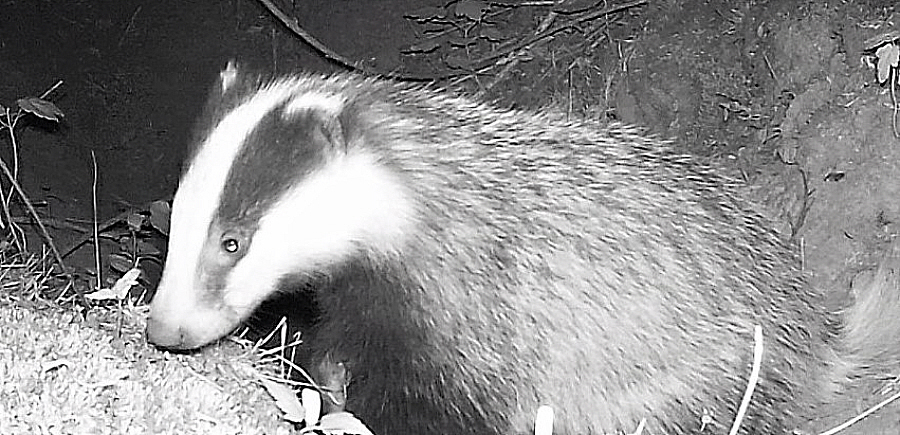
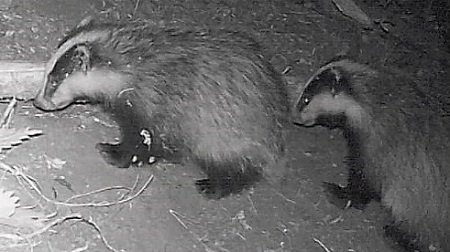
| Badgers after dark explore their sett and rummage for food (infra red image) | |
|
|
|
|
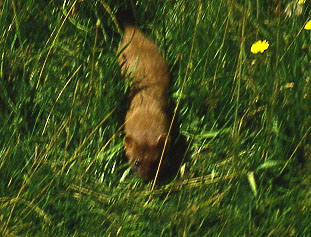
STOAT
Mustela erminea and WEASEL Mustela nivalis are both glimpsed in
the forest. The stoat feeds on birds and rabbits and is seen in woodland
and scrub areas. It has a black tip to the tail. The Weasel is
often seen on the farm where it feeds on small mammals. Drawing: Brian
Ecott. Stoat photographed in the rough grassland area by Vic George. |
|
 |
|
| WEASELS inhabit Hainault Forest but are rarely seen. They can be told apart from stoats because weasels are smaller and don't have a black tip on the tail. Length: 25cm. Photo © Radovan Zierik 3rd November 2018 | |
| Insectivores | |
 |
 |
|
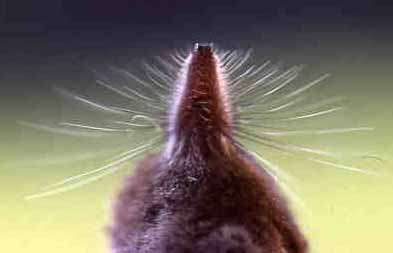
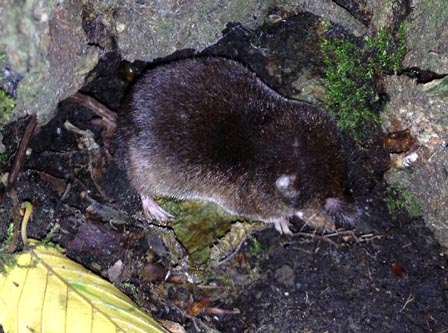
Common Shrew in base of tree. Photos © Martin Duffield |
|
|
|
|
|
COMMON SHREW Sorex araneus Found throughout the forest in grassland and in scrub. Active day and night, a voracious feeder. Feeds mainly on earthworms, beetles. Note the pointed head. |
PIGMY SHREW Sorex minutus Found throughout the forest, but commoner in the long grassland areas compared to the Common shrew. Food similar to common shrew but smaller prey items. |
|
|
|
|
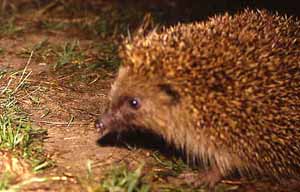
HEDGEHOG Erinaceus europaeus. Found in the forest near housing, using brambles for cover. Mainly nocturnal and feeding on earthworms, beetles, slugs and caterpillars. When disturbed by dogs, foxes or badgers, the hedgehog will roll into a ball protecting vulnerable parts with its spines. |
|
 |
|
|
I'm not a bat or a rat or a cat, I'm not a gnu or a kangaroo, I'm not a goose or a moose on the loose, I am a mole and I live in a hole. Recorded by the Southlanders. Photo © Raymond Small. Molehills on Hoghill. 6th December 2016. |
|
| Voles | |
|
|
|
|
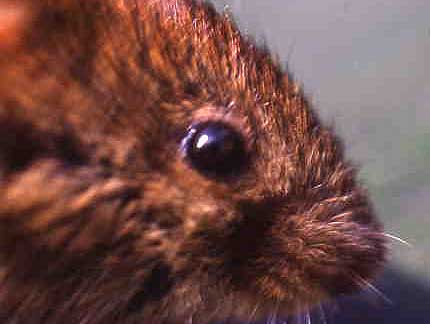
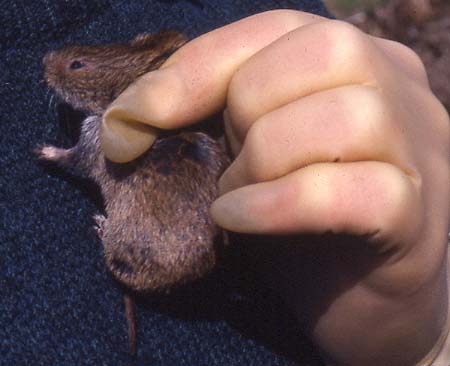
BANK VOLE Clethrionomys glareolus. Not so common in the forest compared to the Field vole below. Mainly associated with woodland and scrub edges. Above right Young Bank vole |
|
|
|
|
|
FIELD VOLE Microtus agrestis Common in the grassland areas and right showing its short tail compared to the Bank vole. |
|
| Rats and Mice | |
|
|
|
|
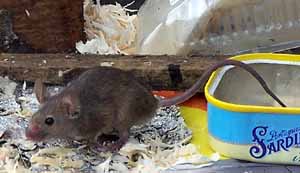
HOUSE MOUSE Mus musculus. Found around the farm and buildings. Eyes smaller than the Woodmouse. |
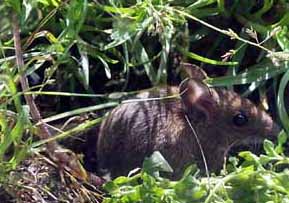
WOOD MOUSE Apodemus sylvaticus. Common in the woodland and scrub areas of the forest where there is good ground cover. Mixed diet of seeds and invertebrates. |
 |
 |
|
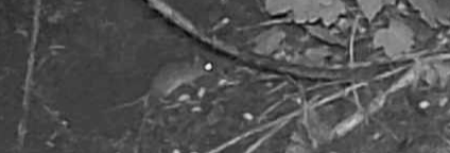
Two bright eyes in the above pictures is probably that of a woodmouse. (Infra red images) |
|
|
|
|
|
YELLOW NECKED MOUSE Apodemus flavicollis. The Yellow necked mouse is slightly larger and heavier than the Woodmouse. It often climbs trees and is more vocal. There is a good breeding colony in Hainault Lodge Nature Reserve and almost certainly in the forest, although live trapping has not been carried out there. Right: Photographed in a nest box on the Hainault Lodge Nature Reserve in Dec 2006. It can be distinguished from the Woodmouse by a yellow-brown band on the underside of the neck. |
|
|
|
|
 |
|
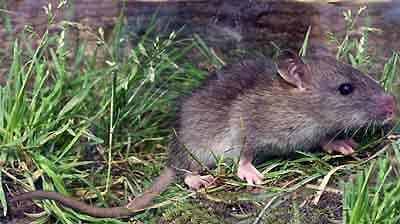
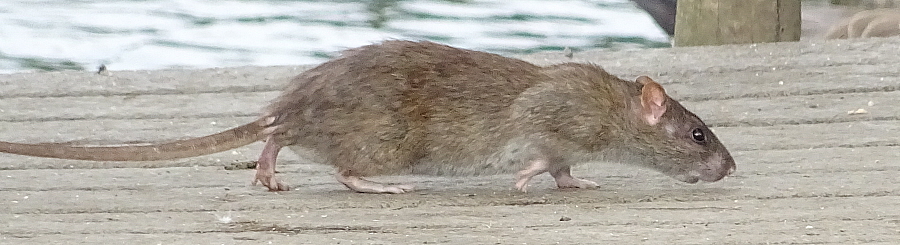
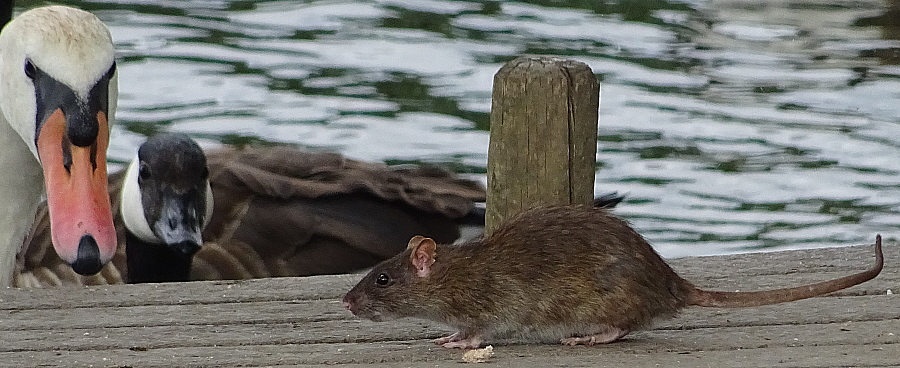
| Rat photographs above and below © Raymond Small. July 2019. | |
 |
|
|
COMMON RAT Rattus norvegicus. Found around the farm and commonly in the forest especially around the lake and ponds where excessive amounts of bread are left for the wildfowl. The thick base of tail distinguish it from a mouse. |
|
| Grey Squirrel | |
|
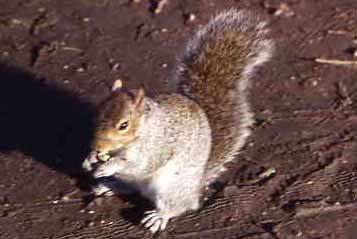
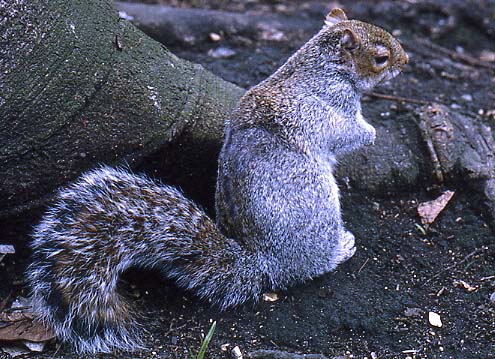
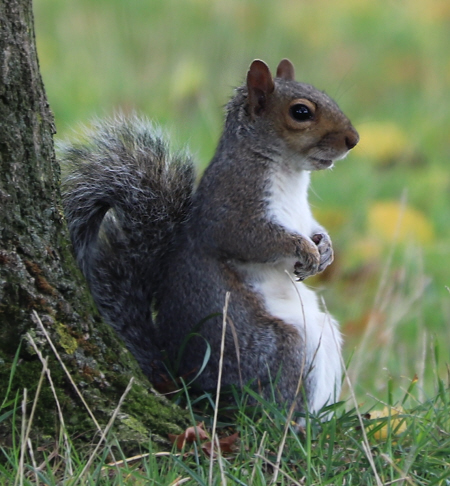
Grey squirrel. Photo © Michael Rumble 14th July 2016. (Above) Relaxing after planting acorns hopefully to dig up later in the winter, this grey squirrel was photographed © Michael Trump on the 1st October 2017. (Right) |
 |
|
|
|
|
GREY SQUIRREL Sciurus carolinensis. Common in all parts of the forest. |
|
 |
|
|
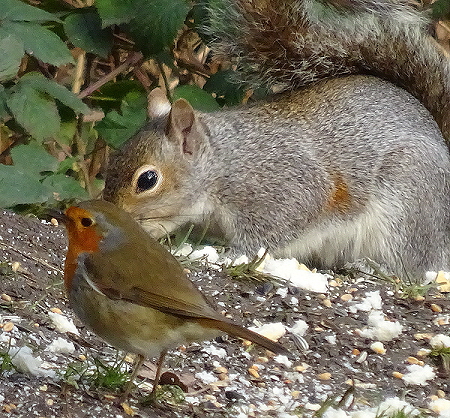
Sharing. Robin and Grey squirrel at Sheepwater. 7th March 2017. Photo © Raymond Small |
|
|
Rabbits and Hares |
|
|
|
|
|
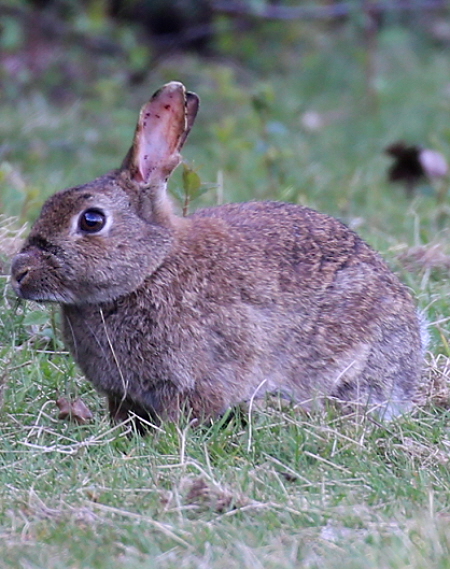
RABBIT Oryctolagus cuniculus. Common throughout the forest, feeding in rides and scrub areas. It will feed in the grassland areas at dusk and dawn. |
The swollen eyes and its approachability shows the rabbit suffering from myxomatosis. Photo: 1st July 2006 in the plantation. |
|
|
|
|
Rabbits come out through the blackberry bushes to feed on the grass. Photo © Colin Carron. 18th February 2016. |
|
|
|
|
|
A Rabbit appears to have been in a fight. Photo © Colin Carron 11th May 2017. |
|
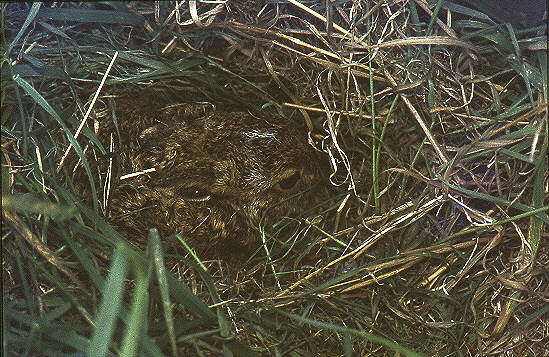
BROWN HARE Leverets in their form 1985. Photo © Vic George. Hares used to be seen in Latchford Meadow. |
|
| Fox | |
|
|
|
|
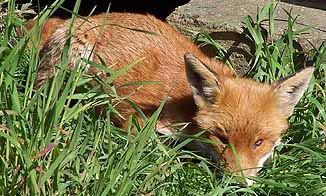
FOX Vulpes vulpes. It is nocturnal but often seen in the forest and Hainault Lodge Nature Reserve during the day.. |
FOX sleeping by the old camp |
 |
|
|
Fox examining warren after dark (infra-red) |
|
| Fallow deer | |
|
|
|
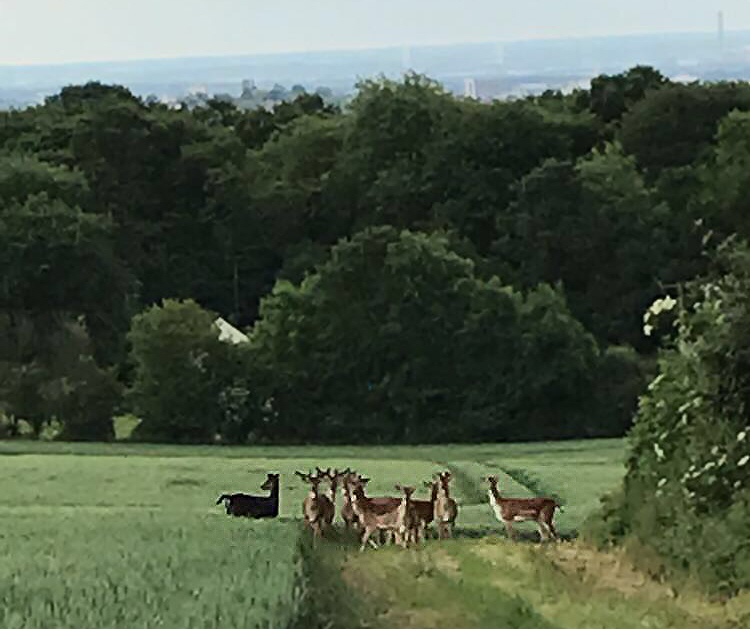
| Louise Waters kindly sent me this photograph of a small herd of Fallow deer seen recently from her cottage in Lambourne End on the edge of the Forest. Two bucks with antlers are present. On the left is a dark form normally associated with the Epping Forest herd.. | |
|
|
|
|
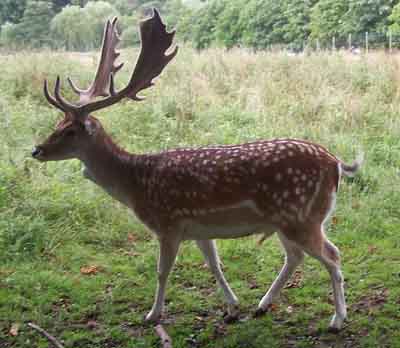
FALLOW DEER Dama dama. Buck photographed at Weald Park. The Fallow seen in Lambourne forest and the surrounding fields are generally darker and lack the spots. |
Small Fallow deer herd on 13th February 2007 seen on the Havering Park Farm. |
|
|
|
|
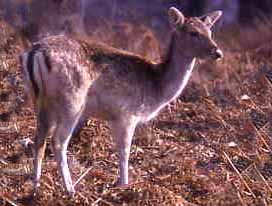
Fallow doe. The male is a buck and the female a doe. |
|
| Muntjac | |
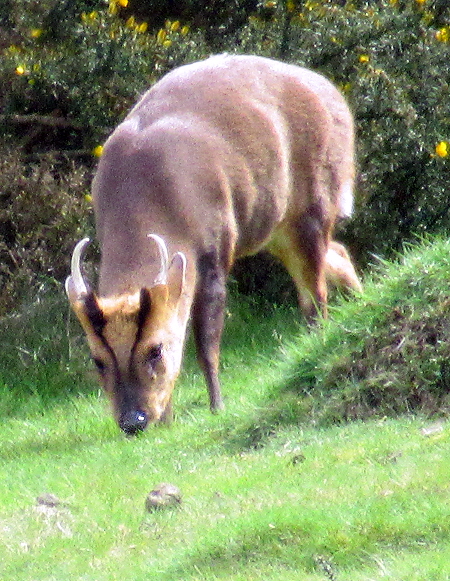
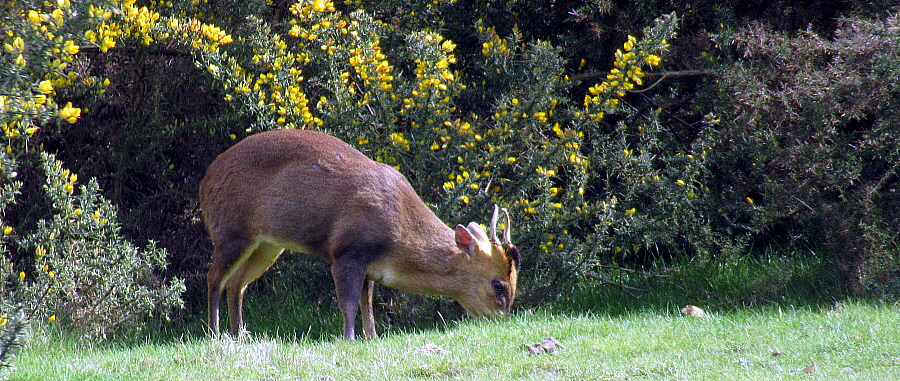
| Muntjac deer originate from South East Asia but some escaped from Woburn, Bedfordshire in 1900 and since the 1950's they have spread over most of the south-east of England. Photo © Brian Ecott. 6th April 2018 | |
 |
|
|
|
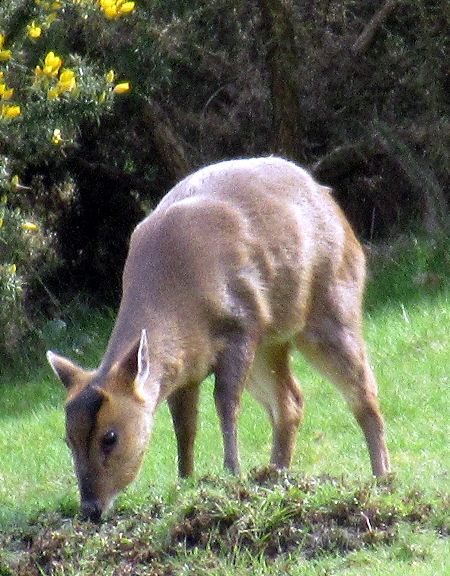 |
| The buck (left) is stockier than the doe (right) and has two backward pointing antlers. The neck is thicker and there is yellow on the forehead. Muntjac stand at 48cms with does slightly smaller. They are active day and night. Photos © Brian Ecott. 6th April 2018. | |
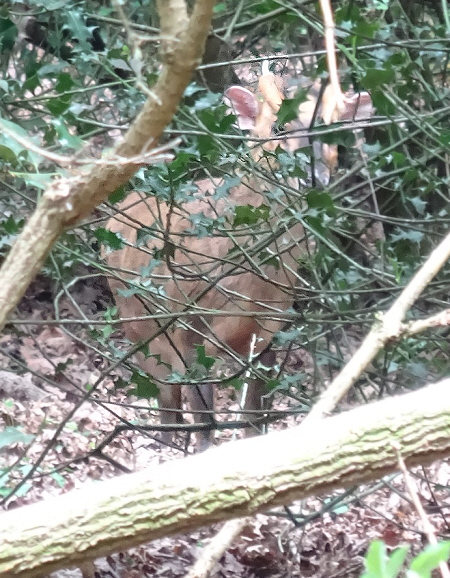 |
Raymond Small tracked down a continual barking sound in Hainault Lodge
on 5th May 2017 which turned out to be a Muntjac aka Barking deer. He
found it hiding in a holly bush. Photo © Raymond Small.
MUNTJAC Muntiacus reevesi. Present in the forest but generally unseen. Can be mistaken for a dog running through the undergrowth. |
 Hainault Forest Website